

Phone Exercises to Learn Beginner English Speaking Skills for Telephoning
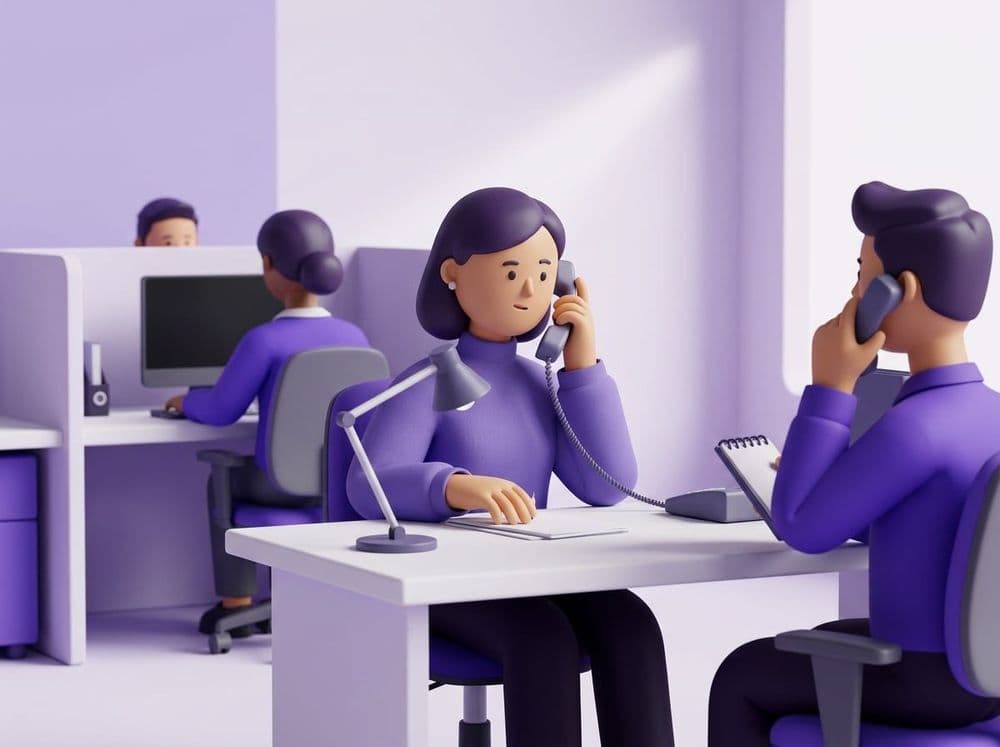
Stop freezing when the phone rings. Practice these simple exercises to learn beginner English speaking skills for telephoning and handle calls with confidence.

Answering a service or workplace call removes the face-to-face clues people usually rely on to understand each other. Since you can't read lips or see hand gestures, you must know the exact words to say when someone asks a question. Doing these simple exercises will help you learn beginner English speaking skills, giving you the exact scripts you need for telephoning so you don't freeze.
Key Takeaways
Below are the key takeaways in this guide:
- Phone rules: You use special words on the phone that you don't use in person.
- Lifesaver phrases: Memorizing short sentences stops you from freezing when a caller speaks fast.
- Polite messages: Changing direct words into polite words helps you sound professional on an audio call.
- Loora role-plays: Loora runs interactive, multi-turn role-plays that simulate real workplace situations so you can practice your phone skills safely before picking up a real call.
Core Exercises for Phone Speaking Practice
These written drills will build the vocabulary and grammar foundation needed before practicing out loud. You must learn the exact words first. Doing basic telephone exercises trains your brain to remember the right words fast.
Good phone speaking exercises give you a safe place to practice. You can learn the rules here without any stress. Let's look at the exact words you need to start a call.
Telephone Greetings and Simple Answers
People use a special style of speaking on the phone. We call this the telephone register. For example, you don't say "I am John" on the phone. You say "This is John" instead. [This is the standard way to introduce yourself on the phone].
Try this matching exercise to test your beginner telephoning skills. [Match the caller's question to the correct greeting answer].
- "Hello, can I speak to Mary?"
- "Who is calling, please?"
- "Is this the sales department?"
- "Is John available?"
A. "This is David Smith." B. "Yes, how can I help you?" C. "Speaking." D. "I am sorry, he is in a meeting."
When you answer the phone at work, keep your words short and clear.
Asking a Caller to Repeat or Speak Slowly
I remember taking my first English office call. The caller spoke very fast over a bad connection, so my mind went completely blank. I felt so embarrassed. Then I learned a simple lifesaver phrase to ask the person to repeat the words. Having a memorized phrase fixed the problem instantly.
You can use these gap-fill exercises for your English phone practice. [Choose the best word to fix the communication problem]. Fill in the missing blanks using "speak slowly", "repeat", "speak", or "spell".
- "I can't hear you well. Could you _____ that, please?"
- "You are talking very fast. Could you _____ _____ please?"
- "I don't know that name. How do you _____ it?"
- "The line is very bad. Could you _____ louder, please?"
Follow up by asking an open question like, "Could you tell me the name again?"
Taking a Basic Phone Message
Sometimes the person the caller wants isn't there. You need to take a message. You must learn telephoning English rules to sound polite. Don't use blunt or direct words on an audio call.
Try this beginner telephone conversation practice. [Rewrite the bold words to be a polite phone message].
- Change "He is not here." -> "He isn't ________ right now."
- Change "What do you want?" -> "Can I take a ________?"
- Change "Give me your number." -> "Can I get your ________?"
- Change "Call him later." -> "Could you please ________ back later?"
Using polite words keeps the caller happy and calm.
Answer Key for Telephone Exercises
Check your answers below. Practice English phone calls by reading these correct answers out loud.
Greetings Answers:
1 matches with C. [Use this when the caller asks for you by name]. 2 matches with A. Say "This is" instead of "I am". 3 matches with B. Confirm the department and ask to help. 4 matches with D. This is a polite way to say someone is busy.
Gap-Fill Answers:
- repeat. This asks the person to say the words again.
- speak slowly. This helps when the person talks too fast.
- spell. This helps you write down a difficult name.
- speak. This helps when the phone connection is quiet or bad.
Message Answers:
- available. This sounds much better than saying "not here".
- message. This is the polite way to ask what they need.
- number. This is a gentle way to ask for their phone details.
- call. This asks them nicely to try again.
Knowing these words is the first step. Speaking them out loud is the next step.
Practicing Your Phone Skills Aloud ELSA Speak vs Pimsleur vs Loora
How can you practice these written phrases out loud before a real call happens? You need the right tool to practice English phone calls safely. Looking at basic pronunciation tools vs Ai English Tutor (Loora) helps you choose the best practice method.
Comparison of English Phone Practice Tools
| Feature | Audio Method (Pimsleur) | Pronunciation App (ELSA Speak) | AI English Tutor (Loora) |
|---|---|---|---|
| Main speaking goal | Helps you repeat audio phrases while you travel. You listen and talk to build memory. | Fixes your exact sounds. It helps people understand your words clearly on a bad connection. | Builds your speaking confidence. You practice real live phone calls without any fear. |
| Real life situations | Uses basic travel and daily life topics. It doesn't focus on specific office tasks. | Uses set sentences that don't change. The app doesn't react to your answers. | Acts out real workplace calls. You can practice client updates and taking messages. |
| Useful for work | Good for basic daily chats. It lacks the deep business words you need for the office. | Good for clear speech. It doesn't teach you how to handle a real business talk. | Made for professionals. You practice hard job situations safely before they happen. |
| Make your own situations | You must follow the exact audio lessons they give you. You can't change the topic. | You follow a strict path to fix specific mouth sounds. You can't type in a new topic. | You can type in an exact phone call. You can practice a specific meeting you have tomorrow. |
| Real back-and-forth talk | You just listen and repeat after the recorded voice. The voice never talks back to you. | You read a sentence and it checks your voice. It doesn't ask you questions. | You talk and it answers you back like a real person. It asks you follow-up questions. |
| What it fixes for you | Helps you remember words using spaced audio practice. It builds your basic vocabulary. | Tells you exactly how to move your mouth and tongue. It fixes your individual sounds. | Fixes your grammar instantly. It helps you choose natural words while you are talking. |
| Feels like a real phone call | Feels like listening to a radio show or a lesson. It doesn't feel like a live call. | Feels like a strict test of your voice sounds. You don't feel the flow of a chat. | Feels like calling a real client. The AI pushes back and acts like a real caller. |
| Understands the topic | Plays the same recorded audio for everyone. It doesn't know what you care about. | Only checks your sounds. It ignores the actual meaning of the words you say. | Follows your exact topic. It changes the chat based on the words you choose to use. |
| Prepares you for real calls | Helps you learn basic words before you talk to people. It doesn't train you for fast talkers. | Helps you say individual words clearly over the phone. It doesn't prepare you for surprise questions. | Gives you a snail button to slow down fast speech. This helps you understand the caller easily. |
| Best result for you | You will remember basic travel words easily. You will feel ready for a simple trip. | You will sound clear when you say short sentences. Your sounds will be very exact. | You will handle real phone calls without freezing. You will answer questions without feeling scared. |
Conclusion
Telephoning gets much easier when you build muscle memory through structured practice. Learning the vocabulary is only the first step for a basic call. You must use live roleplay practice to rehearse these phone skills before you speak to a real client.