

Checklist to Improve Beginner English Speaking for Meetings
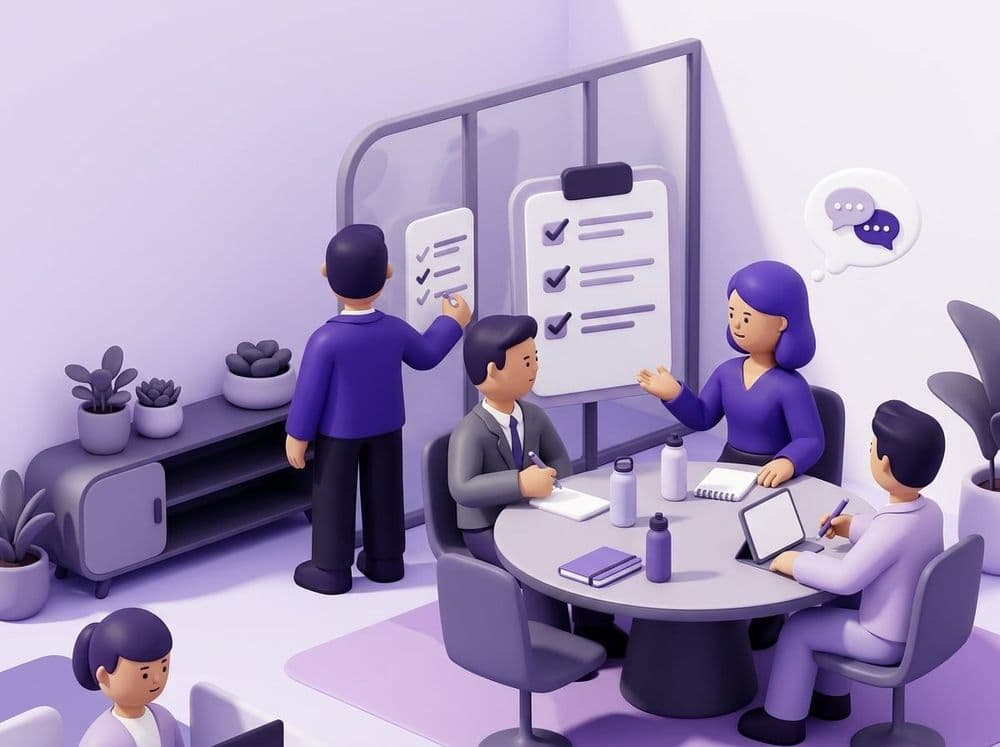
Use this checklist to improve beginner English speaking for meetings. Learn basic phrases, prepare your notes, and build confidence before your next call.

Global teams use clear, quick updates to keep projects moving. This checklist helps improve beginner English speaking for meetings with simple steps. You get a step-by-step prep tool and simple scripts for your next call.
Key Takeaways
Below are the key takeaways in this guide:
- Prepare one clear update: Write one short sentence before the meeting starts.
- Use simple phrases: Clear words work better than hard words in global meetings.
- Ask for repeat help: One calm phrase can give you more time.
- Practice out loud: Reading is useful, but speaking builds real meeting skill.
- Loora meeting practice: Unlike language schools or private tutors, Loora gives 24/7 role-play for your exact meeting script.
The 3-Step Meeting Survival Checklist
A good meeting English checklist gives you words for three moments: before, during, and after. This keeps your English meeting prep small and clear, so you can improve speaking for work one sentence at a time.
I once coached a project lead who used only one phrase in a weekly sync: "Can you say that again, please?" The team repeated the point, and the meeting continued. Simple worked. Trying hard words often makes speaking slower, while basic English phrases for meetings help people understand you fast.
Before the Meeting: Prepare Your Notes
Use this list 15 minutes before your Zoom call or Teams meeting.
- Write your one-sentence update.
- Write the names of key people.
- Open your slide deck, notes, or agenda.
- Keep a small cheat sheet on your screen.
- Write three simple phrases you can say.
- Say your update out loud three times.
- Check your mute button and screen sharing.
- Breathe, then speak in short words.
Use this simple update:
"My update is ____."
Example:
"My update is the report is ready."
Keep your basic vocabulary near your screen. Good notes reduce the work your brain does during the call.
During the Meeting: Simple Phrases to Speak Clearly
In a meeting, your goal is clear English, not perfect English. Short sentences help your team follow you, and they also help you speak clearly.
Use these scripts:
Greeting
"Hi everyone." "Good morning." "Nice to see you."
Short status update
"My update is ____." "I finished ____." "I am working on ____." "I need help with ____."
When someone asks you a fast question
"Can you repeat that, please?" "Can you say it more slowly, please?" "I need one moment, please."
When you need to check meaning
"Do you mean ____?" "So, the next step is ____?" "I will do ____ by ____."
If you freeze when asked a direct question, use one safe sentence first: "I need one moment, please." That phrase gives you time and keeps the meeting moving.
After the Meeting: Quick Follow-Up Steps
After the call, use your meeting notes while the talk is still fresh. This helps you check action items with your colleagues or manager.
- Write the main decision.
- Write your action item.
- Write the due date.
- Send one short message if needed.
- Save new words for next time.
Use this short message:
"Hi ____. Thank you for the meeting. I will do ____ by ____."
You can also ask your manager:
"Can you confirm my next step, please?"
This is professional, clear, and simple. It shows that you listened.
How to Practice Your Meeting Checklist
Reading your checklist is a good start, but your mouth needs practice too. Say each phrase out loud before the real meeting, so the words feel more ready.
Loora is an AI tutor made for voice practice in a safe environment. It gives real-time feedback on grammar and pronunciation, and it lets you build custom work scenes.
Comparing Practice Methods
Use this table to choose how to practice before a business meeting.
| Practice point | Loora | Preply | British Council |
|---|---|---|---|
| Main speaking goal | You speak with an AI English tutor. It's built for live voice practice. | You speak with a human tutor. The lesson plan depends on your teacher. | You learn in a class setting. The class may include speaking tasks. |
| Real work practice | You can run meeting role-plays. Use it for a daily stand-up or project update. | A tutor can make meeting practice for you. You need to brief the tutor first. | A class can teach work English. The practice often follows the course plan. |
| Work meeting fit | Built-in scripts adapt to your level and work area. You can keep the words simple. | A good tutor can fit the lesson to your job. This depends on the tutor. | Strong for class learning and group tasks. Work focus depends on the course. |
| Role-play choice | You can create your own meeting scene. Try "weekly sync with my manager." | You can ask for a role-play. The tutor decides how to run it. | Role-play may happen in class. The teacher sets the task. |
| Back-and-forth talk | Loora asks follow-up questions. It can give pushback in a work role-play. | A tutor can ask real follow-up questions. This is strong human practice. | Class talk can include group work. You may get less speaking time. |
| Feedback | Loora gives real-time grammar and pronunciation feedback. After the talk, it reviews your speech. | A tutor can correct you during or after class. Style depends on the tutor. | A teacher can give class feedback. Personal feedback may depend on class size. |
| Live meeting feel | Loora can make the role-play feel like a real call. It can ask new questions. | A tutor can act like your manager or coworker. This can feel very real. | Class tasks help you practice with people. The scene may be less like your exact meeting. |
| Time and schedule | You can practice anytime. This helps the day before a call. | You need to book a lesson. Time depends on tutor space. | You follow the class schedule. This gives clear routine. |
| Exact script practice | You can rehearse your own words. Repeat until they feel easier. | You can send your script to a tutor. They can help you say it better. | You can practice set phrases from class. Your exact script may need extra help. |
| Best use | Best for fast meeting prep on demand. Use it before a call. | Best for human support and culture tips. Choose a tutor who knows work English. | Best for steady class study. Choose it if you like a school plan. |
A checklist gives you the words. Spoken role-play helps you use them when someone asks, "Can you give us an update?"
Conclusion
Beginner speaking tips for meetings should stay simple. Clear English is better than long, hard grammar in a global business meeting.
Use your checklist before, during, and after each call. Write one update, practice it out loud, then save new words from your meeting notes.
Confidence grows from small clear actions. Start with one safe phrase, like "Can you repeat that, please?" Then add one short update for your next weekly sync or project call.