

The Ultimate Checklist to Improve Beginner English Speaking Fluency for Tourism
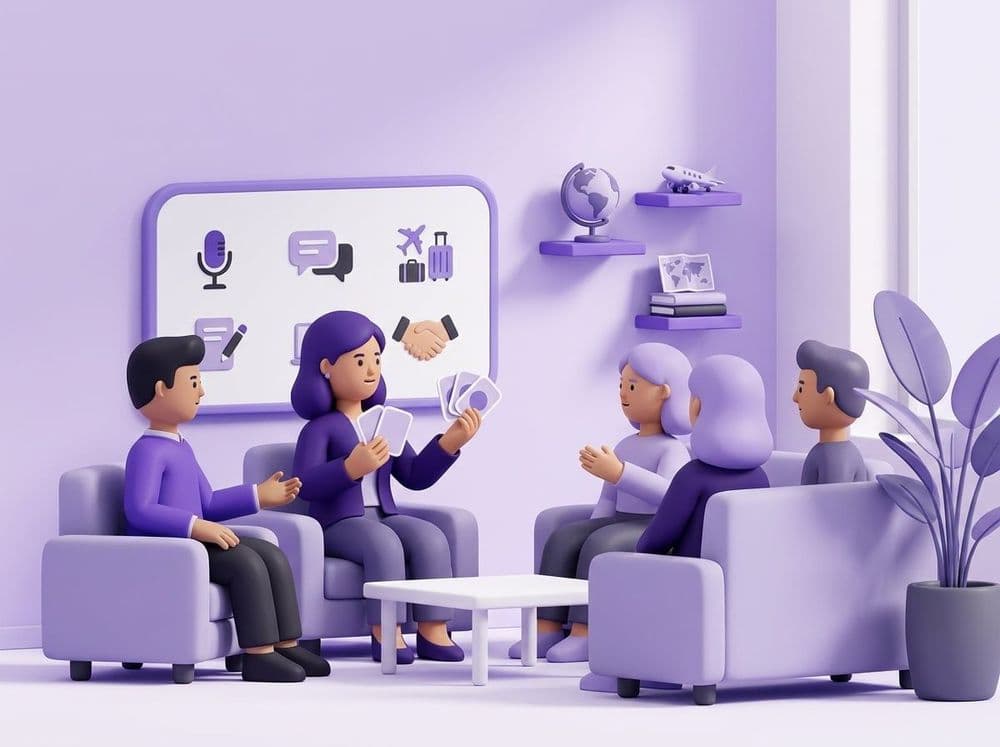
Don't freeze up on your next trip. Use this checklist to improve beginner English speaking fluency for tourism and practice survival phrases with confidence.

Airports and hotels need fast, clear words. For tourism, this checklist helps beginner English words flow when staff ask you simple questions. This guide gives you travel phrases, out-loud drills, and a short pre-trip plan.
Key Takeaways
Below are the key takeaways in this guide:
- Short phrases work best: Clear words help people understand you fast.
- Speak out loud daily: Your mouth needs practice, not just your eyes.
- Travel scripts save time: Use set phrases for airports, hotels, food, and taxis.
- Loora helps before travel: Loora gives 24/7, judgment-free travel roleplays with quick feedback, so it can feel easier than booking live tutors when speaking feels tense.
- Smooth beats long: A short sentence with good rhythm works better than a long one.
Your Pre-Trip Travel English Checklist
A strong travel English checklist should help your mouth move fast. It should not be a long grammar list. Your goal is simple. Say beginner travel phrases with a steady speaking rhythm.
Use this checklist on your phone before your trip:
- Say your name clearly.
- Say your flight number.
- Ask where baggage claim is.
- Ask for help at customs.
- Check in at a hotel.
- Ask for your room key.
- Order one meal and one drink.
- Ask for the bill.
- Ask for directions.
- Take a taxi with one clear sentence.
- Say one emergency phrase.
- Repeat each line out loud three times.
Survival phrases work best when they feel easy in your mouth. Read them, then say them. Then say them again with no pause.
Airport and Hotel Survival Phrases
At an airport or hotel, short and smooth is best. You don't need long grammar. Staff need to understand your main point.
Use these phrases:
- "Here is my boarding pass."
- "Where is baggage claim?"
- "I am here for customs."
- "I have a reservation."
- "My name is..."
- "Can I have my room key, please?"
- "What time is check-out?"
- "Can I have late check-out, please?"
Say each phrase in one breath, so you don't add extra words. A smooth line like "I have a reservation" beats stops after each word.
Ordering Food and Getting Around
Restaurants and taxis need clear, fast phrases too. When ordering from a menu, start with one easy line. This helps you stop translating in your head.
Practice these phrases:
- "Can I have this, please?"
- "I would like water, please."
- "No meat, please."
- "Can I have the bill, please?"
- "Where is the train station?"
- "Can you show me on the map?"
- "I need a taxi, please."
- "Please take me to this hotel."
When asking for directions, point to your map and speak slowly. When taking a taxi, show the address and say one clear line. Simple words help the other person answer fast.
Daily Habits for Smoother Speaking
To improve speaking fluency, practice the same short lines out loud each day. I once coached a traveler who read five hotel phrases. The words felt easier after out-loud practice.
Try this daily practice habit:
- Choose five travel phrases.
- Say each phrase slowly.
- Say each phrase again faster.
- Copy the sound after a clear voice.
- Repeat the phrase while walking.
- Use one phrase in a mock conversation.
This is shadowing, which means repeating out loud after a voice. It builds muscle memory. Your mouth learns the path of the words, like your hand learns a route on a map.
Keep the sentences short. Say "I have a reservation" until it feels smooth. Then add one more line, like "Can I have my room key, please?" Smooth first, more words later.
How to Practice Your Travel Checklist Before You Fly
Reading the lines is a start, but tourism English practice works better when you speak. Use an AI conversation partner or an online tutor to test your travel words in a low-pressure environment.
Comparing Loora, Cambly, and Preply for Travel English Practice
| Practice point | Loora | Cambly | Preply |
|---|---|---|---|
| Main practice goal | Loora helps you speak out loud in live roleplays. It gives real-time grammar and pronunciation feedback. | Cambly gives video calls with native speakers. It works well for casual chat practice. | Preply connects you with human tutors. Your lesson goal depends on the tutor you book. |
| Real travel situations | You can set a custom travel roleplay, like hotel check-in or customs. Loora can ask follow-up questions. | You can ask a tutor to practice travel talk. The chat may feel more casual. | A tutor can plan a travel lesson for you. This depends on their style. |
| Useful for your trip | Loora lets you repeat the same trip lines until they feel easy. This can help your words come faster. | Cambly can help you hear real speech from a native speaker. That can support trip talk. | Preply can help you prepare before a trip. You may need to book ahead. |
| Making your own practice | You can create a clear scene, like "I need to check in at a hotel." Then you speak through it. | You can explain what you want to practice. The tutor then guides the call. | You can tell the tutor your travel plan. The lesson depends on the tutor. |
| Real back-and-forth talk | Loora answers you, asks more questions, and keeps the roleplay going. This builds fast replies. | Cambly gives real talk with a person. The flow depends on the tutor and call. | Preply gives real talk with a tutor. The flow depends on lesson setup. |
| What it corrects | Loora corrects grammar and pronunciation as you speak. After the talk, it reviews grammar, pronunciation, and word choice. | A Cambly tutor may correct your speech. The type of correction depends on the tutor. | A Preply tutor may correct grammar, words, or sound. This depends on the tutor. |
| Practicing under pressure | Loora can add follow-up questions in a roleplay. This helps you answer without long pauses. | A live call can feel like real travel talk. Some learners like that real person feeling. | A tutor can ask harder travel questions. You need to plan this with them. |
| Knowing your specific situation | You set the scene, like airport customs or asking for late check-out. Loora uses that scene in the talk. | You can tell the tutor about your trip. The tutor must guide the practice. | You can choose a tutor for travel English. The plan still depends on the tutor. |
| Ready for real travel | Loora helps you rehearse short lines until they feel smooth. It supports clear, quick replies. | Cambly helps you talk with a real person before the trip. This can help with listening. | Preply can give a full lesson plan. It may help if you want human coaching. |
| Creating specific travel moments | You can make moments like "My bag is missing" or "I need a taxi." Then you practice the full talk. | You can ask for these moments in the call. The tutor chooses how to run them. | You can ask the tutor to make travel roleplays. This depends on their lesson plan. |
| Best result for you | You can build smooth travel speech through repeat practice and quick feedback. This can reduce hesitation. | You can get live chat time with a native speaker. This can help you hear natural answers. | You can get human help and a planned lesson. This works best when you brief the tutor first. |
Comparing AI and Human Tutors
Cambly and Preply can be helpful because real people bring human warmth and live speech. For beginners, Loora is strong here. It gives 24/7 custom roleplays, real-time correction, and voice feedback. You don't need to book a call.
That matters when freezing up or hesitation appears. You can repeat "I have a reservation" until it feels easy, slow the voice if needed, and try the hotel check-in again. With a live tutor, that same repeat work can help too, but it depends on time, cost, and the tutor you choose.
Conclusion
Travel English fluency is a work skill for your trip. It helps you move through your travel itinerary with short, clear phrases at the airport, hotel, restaurant, and taxi stand. The goal is being understood, not using hard words.
Keep your checklist simple. Say each phrase out loud, repeat it in a mock conversation, then practice the same travel moment again with small changes. For example, change "Can I have my room key, please?" to "Can I have late check-out, please?"
Your next step is clear. Save the checklist, choose five lines for each travel day, and rehearse them before you fly. Smooth, simple speech can carry you through a real hotel desk or customs talk.