

Beginner English Pronunciation Exercises to Pass Your Speaking Exam
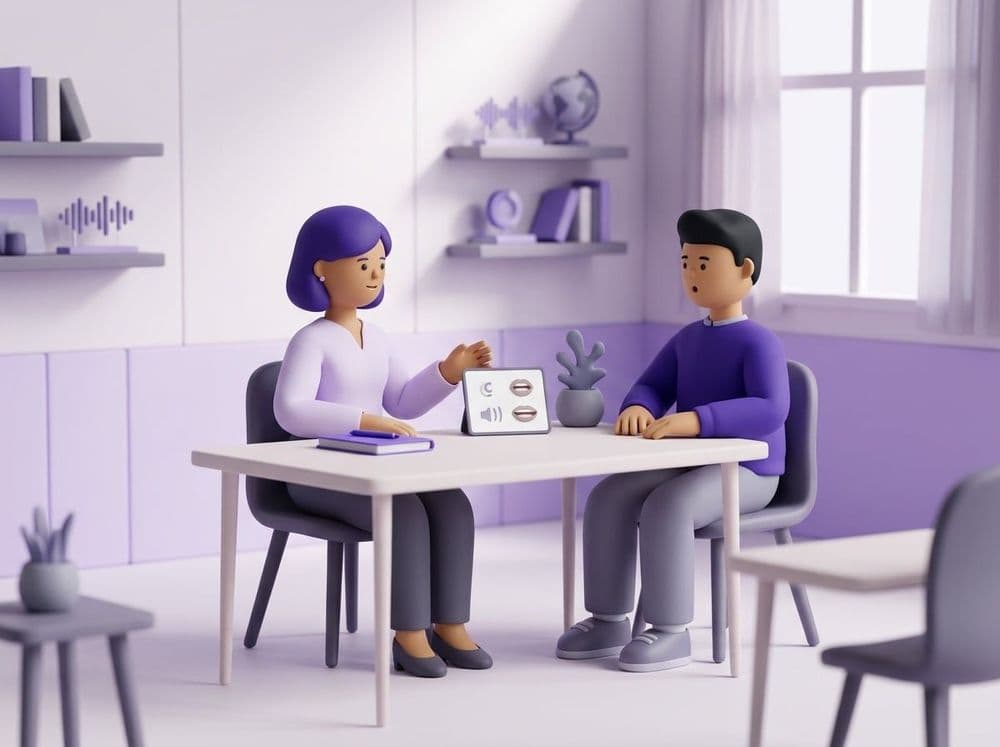
Pass your speaking test with confidence. Discover daily beginner English pronunciation exercises to build muscle memory and speak clearly under pressure.
In an English speaking exam, the examiner grades how clearly you speak, not only what you know. To pass, your mouth must make English sounds under pressure, and a textbook cannot train that movement alone. This guide gives daily pronunciation exercises for beginners, so you can build muscle memory for test day.
Key Takeaways
Below are the key takeaways in this guide:
- Pronunciation is body work: Your lips, tongue, throat, and jaw need daily practice.
- Passive listening is not enough: Watching English helps your ears, but exams test your voice.
- Loora gives active feedback: Loora makes you speak and gives real-time pronunciation feedback.
- Small drills work best: Short daily practice can help you speak more clearly.
- Record one answer daily: Your own voice shows the sound you need to fix.
Why passive listening fails on test day: self-study vs. AI practice
Watching movies and TV with subtitles can help you hear real English and learn culture. However, it doesn't teach you how to practice pronunciation for an English exam, because passive listening doesn't make your mouth move.
Compare your practice options
| Practice point | Loora | Movies & TV Shows with Subtitles |
|---|---|---|
| Speaking focus | You speak out loud. Loora listens and gives feedback while you talk. | You listen and read. Your mouth may stay silent. |
| Sound feedback | Loora shows pronunciation mistakes as they happen. You can repeat the word right away. | You hear clear speech, but no one checks your sounds. |
| Grammar feedback | Loora also marks grammar mistakes during speech. This helps your full answer sound clearer. | Subtitles show correct lines. They do not check your own sentences. |
| Real back-and-forth talk | Loora can answer you, ask follow-up questions, and keep the talk moving. | The actors talk to each other. They do not answer you. |
| Exam pressure practice | Loora can help you answer in real time. That feels closer to a speaking test. | You can pause the video at any time. That is useful, but less like test day. |
| Custom practice | You can choose a topic and speak about it. You can use Loora for a talk you need to rehearse. | You watch the topic in the show. You cannot change the scene. |
| Natural English input | Loora gives native-speaker examples after a talk. You can hear the better sound. | Movies and TV are good for hearing natural voices, accents, and daily phrases. |
| Review after practice | Loora gives a post-talk review for grammar and pronunciation. It can also give one key point to practice. | You can watch again, but you must find your own mistakes. |
| Best use before an exam | Use it for active speaking practice and clear feedback on your voice. | Use it as extra listening practice, not your main exam plan. |
Self-study helps when it makes you speak. If your English test has an oral exam, your daily work must train sound, stress, and voice control.
3 Daily Exercises to Build Speaking Confidence
Pronunciation grows when your mouth repeats the same sound many times. These beginner pronunciation drills train English sounds with short, safe steps and clear mouth position.
Task: Shadow one short sentence.
Prompt: "I live in a small town."
Action: Listen once. Then say it right after the voice. Copy the stress and speed.
Task: Use a mirror for one vowel sound.
Prompt: Say "cat, bag, hat."
Action: For the "a" sound in the middle of "cat," open your mouth wide. Keep your tongue low.
Task: Record one exam answer.
Prompt: "My name is Ana. I like music."
Action: Record yourself. Listen once. Pick one sound to fix.
The shadowing technique for exam rhythm
Shadowing means listen and repeat right away. Use one short line, not a long speech. This helps word stress because your voice learns which words sound stronger.
Try this sentence: "I LIVE in a SMALL town." Stress live and small. Your voice should rise a little on these words, then relax.
A practice partner can help, but you can also use audio. Keep the sentence simple, so your mouth can focus on rhythm.
The mirror drill for vowel sounds
Mirror practice helps you see vowel sounds. A vowel sound comes from an open mouth path, so the shape matters.
Say "cat." For the "a" sound in the middle of "cat," open your jaw more than in your own language if needed. Your lips stay relaxed, and your tongue stays low.
Now say "see." For the "ee" sound at the end of "see," smile a little. Your tongue sits high, and the sound feels longer.
Say these pairs slowly:
- cat, see
- bag, bee
- hat, he
Clear speech starts with clear shapes. Don't rush this drill.
The recording drill to check your own voice
I still remember hearing my recorded English voice for the first time. It felt strange, and I wanted to stop the audio. Then I heard one small sound I kept dropping, and that made the next practice clear.
To record yourself, choose one speaking practice for English tests. Say a short answer, like "I go to school by bus." Listen back one time only.
Then pick one sound. For the "s" sound at the end of "bus," keep your tongue near the top teeth, but do not touch them. Let air pass out.
This helps with test anxiety because you know what to fix. You don't need to fix every sound today.
Common Pronunciation Mistakes That Cost You Points
Examiners listen for clear word endings. When test pressure rises, many beginners drop consonants because the mouth stops too soon.
Mistake one: dropping the "t" sound at the end of "cat." To make the "t" sound at the end of "cat," touch your tongue to the gum behind your top teeth. Stop the air, then let it go.
Practice this change:
- ca → cat
- ha → hat
- no → not
Mistake two: losing the "s" sound at the end of plural words. In "two books," the "s" sound at the end of "books" shows more than one. Keep the air moving at the end.
Practice this change:
- one book → two books
- one cat → two cats
- one bag → two bags
Mistake three: making every word the same strength. English uses word stress, so key words sound stronger. In "I LIKE pizza," stress like, because it carries the main idea.
Answer key: The fixed words are cat, hat, not, books, cats, and bags. Say the last sound clearly each time.
These small endings can affect a passing score because they change meaning. Use this short drill to correct mistakes with final sounds. Train them like small mouth moves, not hard grammar rules.
Conclusion
Pronunciation is a real speaking skill. Your mouth, tongue, lips, and voice need daily active learning, just like any body skill.
Passive listening can help your ears hear English. Active output with feedback helps you speak on test day, because the examiner hears your voice, not your notes.
Start your daily routine with one shadow line, one mirror drill, and one short recording. Use the words from your exam topics, then repeat the sounds that need more care. This is the work that builds clear speech for a speaking exam.